Showing posts with label Science - biology. Show all posts

Tuesday, June 12, 2012

Classification of carbohydrates with examples

Classification of carbohydrates with examples

What are carbohydrates?
Carbohydrates are organic compounds made up of the elements or components carbon, hydrogen, and oxygen. The hydrogen and oxygen atoms are present in the ratio 2:1. The general formula for carbohydrates is CnH2mOm.

Foods containing carbohydrates come mainly from plants and are a good source of energy for the body. There are three main groups of carbohydrates: monosaccharide, disaccharides, and polysaccharides.

Monosaccharide or single sugar
There are many single sugars or monosaccharide. The most common single sugar are the sugars with six carbon atoms – glucose, fructose, and galactose. Glucose is found in all animals, at least in small quantities. Fructose is found in plants, but rare in animals. Galactose is found in milk sugar from mammals. Glucose, fructose, and galactose have the same general formula C6H12O6, but their atoms are arranged differently within the molecules. These different arrangements give the sugars different chemical and biological properties.

Disaccharides or double sugars
Double sugars are so called because each molecule of a double sugar is made up of two molecules of single sugars bonded together. Double sugars are also called disaccharides. Disaccharides have the general formula C12H22O11. However, their atoms have different arrangements within the molecules. Common disaccharides are maltose, sucrose, and lactose.
  • Maltose = glucose + glucose. Maltose occurs in sprouting grains.
  • Sucrose = glucose + fructose. Sucrose occurs in sugarcane stems, sweet fruits, and certain storage roots, for example, carrots.
  • Lactose = glucose + galactose. Lactose occurs in the milk of all mammals, including humans.

Polysaccharides or complex carbohydrates
Polysaccharides consist of many monosaccharide molecules joined together. Starch, glycogen, and cellulose are complex carbohydrates. Plants store glucose in

My valuable body love a lot of water

How much water do we need?

Water is lost from the body during breathing, in the urine, the feces and through sweating. To replace the amount of water lost daily, a normal, healthy and usually active adult in a temperate climate requires about three liters of water a day. In hot climates, slightly more water may be needed.

The amount of water needed by the body depends on these factors:
  • How active a person is – a person who plays sports or carries out physical labor need more water.
  • How healthy a person is – some diseases, for example, diabetes, causes sufferers to pass much more urine, so they need more water than healthy people do.
  • The environmental conditions – people living in hot and dry climates need more water than those living in temperate climates. However, people who have lived in hot conditions for a long time become adapted to these conditions and therefore need less water than those who have not adapted to hot conditions.

In conclusion,

Friday, June 08, 2012

My life needs H2O

My life needs H2O. Every living thing needs water. Water is an essential component of protoplasm. In mammals, about 70% of the body weight is water. Hence, water is extremely important to life. In fact, in most conditions, human can survive longer without food than without water. A person can survive only three to five days without water, in some cases people have survived for an average of one week.

What are the functions of water?
Water is a solvent for many substances. This property helps water to serve the following functions in the body:

Water is the medium or substance in which chemical reactions occur in an organism.
Water helps to transport dissolved substances around the body, such as:
  • Digested products from the small intestine to other parts of the body.
  • Excretory products or waste products from the tissue cells to the excretory organs for removal from the body.
  • Hormones from the glands to parts of the body which require them.

Water is a key component of:
  • Protoplasm.
  • Lubricants found in joints (lubricants reduce friction between the joints during movement).
  • The digestive juices.
  • Blood.
  • Tissue fluid.

In addition, water has these functions in animals:

Monday, April 02, 2012

CELL STRUCTURE AND ORGANISATION

CELL STRUCTURE AND ORGANISATION

The cytoplasm contains organelles and an internal membrane system called the endoplasmic reticulum (ER). It is an organelle of cells in eukaryotic organisms that forms an interconnected network of tubules, vesicles, and cisternae.

Rough ER (RER) transports proteins from the ribosomes to the Golgi apparatus for secretion out of the cell. Rough endoplasmic reticula are involved in the synthesis of proteins and is also a membrane factory for the cell, while smooth endoplasmic reticula is involved in the synthesis of lipids, including oils, phospholipids and steroids, metabolism of carbohydrates, regulation of calcium concentration and detoxification of drugs and poisons.

Ribosomes are involved in protein synthesis. Most are attached to RER but some lie freely in the cytoplasm.

Smooth ER (SER) is involved in producing fats and steroids and in detoxification.

The Golgi apparatus, also known as the Golgi complex or Golgi body, secretes substances made by the ER out of the cell. It also stores and modifies substances for secretion. This organelle found in most eukaryotic cells.

Vesicles transport substances within the cell.

Mitochondria provide energy when food substances are broken down by oxidation during cell respiration. This membrane-enclosed organelle found in most eukaryotic cells.

Chloroplasts are the sites for photosynthesis. They are present only in plant cells.

Centrioles play a part in cell division. They are present only in animal cells.

Vacuoles in animal cells are small, numerous and temporary. They contain food substances and water. Plant cells have

Thursday, March 01, 2012

The Protoplasm

The function of protoplasm are reproduction, irritability, chemical, excretion, movement, and growth. The protoplasm of a cell is made up of three parts: the cell surface membrane, cytoplasm, and nucleus.

Cell Surface Membrane
The cell surface membrane or plasma membrane surrounds the cytoplasm of the cell. The cell surface membrane is

Friday, January 27, 2012

ADHD Symptoms

Attention deficit hyperactivity disorder, or ADHD used to be known as attention deficit disorder, or ADD. ADHD is a condition affecting children and adults that is characterized by problems with attention, impulsivity, and overactivity. Persons with ADHD act without thinking, are hyperactive, and have trouble focusing. They may understand what's expected of them but have trouble following through because they can't sit still, pay attention, or attend to details. Their symptoms are present over a longer period of time and occur in different settings. According to their symptoms, ADHD has been divided into two subtypes, those are an inattentive type, and a hyperactive-impulsive type.
   
The first subtype is an inattentive type.

Tuesday, November 22, 2011

Characteristics of living organisms

Characteristics of living organisms

There are 9 characteristics of life used to differentiate living organisms from non-living things.


Nutrition
Intake of food into the body and its conversion into new protoplasm.

Respiration
Breakdown of food substances to release energy in cells.

Movement
Ability to move body parts and/or exhibit locomotion.

Excretion
Removal of metabolic waste products formed inside living cells.

Homeostasis
Maintenance of a constant internal environment.

Reproduction
Production of new individuals for the survival of the species.

Sensitivity
Ability to respond to changes in the environment.

Growth
Permanent increase in size with changes in form and structure.

Adaptability
Ability of organism to change so as to improve its chances of survival.


Source: Biology Matter

--- Notions of English Disciple Blog is about Knowledge ---

Steps of the Scientific Method for kids

Steps of the Scientific Method

Biologists make observations and carry out experiments to help them learn about living organisms. This is the scientific method. The scientific method begins with observation and curiosity – asking questions.


Observations can be made anywhere. For example, as you run around playing a game you might notice that you breathe more quickly and that your heart beats faster. You may ask, “how much faster is my heart beating? How long does it take to slow down again? Why am I breathing faster?”. Biology is about finding answers to such questions.

Biologists often use past experiences, ideas and further observations to suggest an explanation or hypothesis to predict what will happen next. For example, “I breathe faster to get more oxygen into my body.” is a hypothesis. “The harder I exercise, the faster I should breathe.” is a prediction based on that hypothesis.

Biologists conduct experiments to test

Sunday, November 06, 2011

Examples of Specialised Cells

These are examples of specialised cells and how they have been modified for specific functions.

1. RED BLOOD CELL

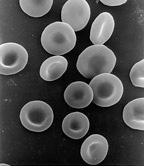
The red blood cell contains a red pigment called haemoglobin. Haemoglobin transports oxygen from the lungs to all parts of the body.

The red blood cell has no nucleus, enabling it to carry more haemoglobin and hence more oxygen.

The red blood cell has a circular biconcave shape. This increases the surface area to volume ratio of the cell. As a result, oxygen can diffuse into and out of the entire cell at a faster rate.


2. XYLEM VESSEL
Xylem vessels are long hollow tubes formed out of xylem cells laid end to end. They conduct water and mineral salts from the roots up to the stem and leaves. Xylem vessels do not have cross walls or protoplasm. This enables water to move easily through the central space or lumen.

A substance called lignin is

Thursday, November 03, 2011

HOMEOSTASIS

Cells require a constant chemical and physical environment in order to carry out their functions. Therefore, organisms must be able to control their internal conditions. The maintenance of a constant internal environment is known as homeostasis. Homeostasis is the process that keeps body temperature constant and ensures that the composition of the body fluids is kept within narrow limits. By ensuring a relatively stable internal environment, homeostasis allows an organism to be independent from changes in the external environment. The external environment is the environment in which an organism lives. The internal environment refers to conditions within the body of the organism. In mammals, this include the blood an tissue fluid. Changes in the blood will affect the tissue fluid, which in turn will affect the cells of the body.

Example

Monday, September 12, 2011

Where Do Crabs Live ?


Where Do Crabs Live ?

Sometimes we see crabs in the water, but sometimes walk on land. Does it mean that crab is an amphibian? Crabs are not amphibians. But why can crabs stay long on the land and in the water?

Monday, August 22, 2011

Mosquito likes flying over black object

Why do mosquitoes prefer to fly over black object?

Actually, mosquitoes can not see well, mosquitoes like to fly above the black object because of the characteristic of black color, and the heat sensor of mosquitoes.

The black color absorbs more heat
In black color, all the spectrum of light absorbed, therefore the energy of radiation received in a black color becomes larger as we get the spectrum of light absorbed. In contrast, the white color reflects all the spectrum of light so that the effect is cooler. Certainly not only black color can absorb all the spectrum of light, but all the dark colors for example dark red, but the best heat absorber is black color.

Mosquito
Mosquitoes have

Friday, August 12, 2011

The Benefits of Dates

The Benefits of Date Palm

The date palm (Phoenix dactylifera) is a palm in the genus Phoenix, cultivated for its edible sweet fruit. Although its place of origin is unknown because of long cultivation, it probably originated from lands around the Persian Gulf. A full grown date palm, or Phoenix dactylifera can reach 82 feet (25 meters) in height, with a spreading crown of greenish leaves.

The date fruit grows in heavy clusters suspended under the leaves, and they are yellow in the early ripening stage, or kimri, the Arabic word for unripe. Some consumers enjoy date fruit in the next stage, khalal, meaning full sized but crunchy, while others wait for dates to reach rutab, ripe and soft. When the date fruit is allowed to sun dry on the tree, it is considered to be in the final tamr stage of ripening.

Dates Fruit Nutrition

Wednesday, August 10, 2011

Facts and Guess about Dinosaurs

If the last dinosaur died 65 million years ago, and the first primitive dinosaurs were on the planet 248 million years ago, then how scientists can tell a lot about dinosaurs? Even some science fiction movie, like Jurassic Park were able to show how the behavior of these animals when alive.